When Trauma Quietly Drives Addiction and Relapse
Unresolved trauma can fuel cravings, overwhelm, and relapse — especially when recovery focuses only on stopping substances.

If you or someone you love is trying to recover from addiction, it’s important to understand this: unresolved trauma can quietly drive substance use—and it can also fuel relapse, even when the desire to stop is genuine.
Trauma is often an unspoken and unacknowledged part of the story for many people struggling with addiction. When this connection is overlooked, treatment may focus mainly on stopping substances without addressing the deeper reasons those substances became necessary in the first place.
As a result, people often walk away feeling discouraged—like they “failed” recovery—when in reality, their nervous system was still fighting an unaddressed battle.
Trauma and Addiction: A Common (and Often Missed) Link
Substance use can increase exposure to traumatic events, including:
accidents and injuries
health crises
violence or exploitation
relational harm and loss
But for many people, trauma began long before substance use did. The Adverse Childhood Experiences (ACE) Study and decades of clinical research have shown that early adversity significantly increases the risk of developing substance use problems later in life.
This isn’t about weakness. Trauma disrupts the nervous system in ways that make coping more difficult—and relief more urgent.
Why Trauma Can Be Hard to Spot
Trauma symptoms vary widely, but often include:
anxiety, fear, anger, or shame
insomnia and nightmares
mood swings or emotional reactivity
difficulty concentrating or “busy brain”
hypervigilance or feeling on edge
strong reactions to specific triggers
These symptoms aren’t just thoughts. They are internal states—felt experiences in the body and nervous system. Tightness. Panic. Numbness. Dread. Agitation. Shutdown.
When these states are misunderstood, they can be mistaken for “addiction behaviors,” especially in early recovery. Without recognizing the trauma component, treatment may focus only on behavior change rather than addressing what’s driving the distress underneath.
Learning to recognize these internal signals—rather than fighting or numbing them—often becomes a turning point in recovery.
When Trauma Isn’t Addressed
If you struggle with substance use and have a history of trauma or adverse life experiences, you might face extra challenges when seeking help.
1. The original wound untouched
Initially, substances may have helped you:
manage anxiety or panic
avoid painful memories
dampen shame
feel less emotionally overwhelmed
numb out or disconnect
The problem is that self-medicating trauma symptoms often leads to uncontrolled patterns while leaving the original trauma unresolved. Substances may offer temporary relief, but over time, they tend to worsen trauma symptoms, increase distress, and hinder the ability to process and heal.
Research consistently shows that treating trauma symptoms helps reduce substance use. The opposite is not always true: treating substance use alone does not reliably reduce trauma symptoms in the same way.
2. Patterns may become more intense
When trauma is part of the picture, substance use often becomes:
more compulsive
more varied (multiple substances)
more closely tied to emotional triggers
Trauma can heighten cravings—especially when cravings are triggered by fear, shame, anger, intrusive memories, or emotional overload.
3. Emotional distress may increase in early sobriety
Trauma and addiction together raise the risk of anxiety, depression, self-destructive behaviors, and suicidal thoughts.
For some, abstinence doesn’t immediately reduce distress—it temporarily exposes it. Without the numbing effects of substances, the nervous system may feel overwhelmed by anxiety, shame, intrusive memories, or insomnia.
When internal distress becomes unbearable, the urge to use substances can return with force.
4. Treatment can feel unsafe or overwhelming
Trauma symptoms can interfere with the ability to benefit fully from treatment.
For example, treatment settings may activate trauma-related responses such as:
difficulty feeling safe in groups
panic or hypervigilance in unfamiliar environments
fear of giving up control
discomfort with confrontation
overwhelm when emotions surface
These reactions are not “resistance.” They are often protective responses from the nervous system.
5. Relapse may follow a predictable cycle
When trauma remains unresolved, a discouraging cycle can develop:
1. You stop using
2. Trauma symptoms intensify
3. The distress becomes overwhelming
4. Relapse happens
5. Shame increases
6. Hope decreases
Over time, recovery can begin to feel impossible.
But the problem is not a lack of motivation. The real problem is that the underlying trauma response remains active and continues to seek relief.
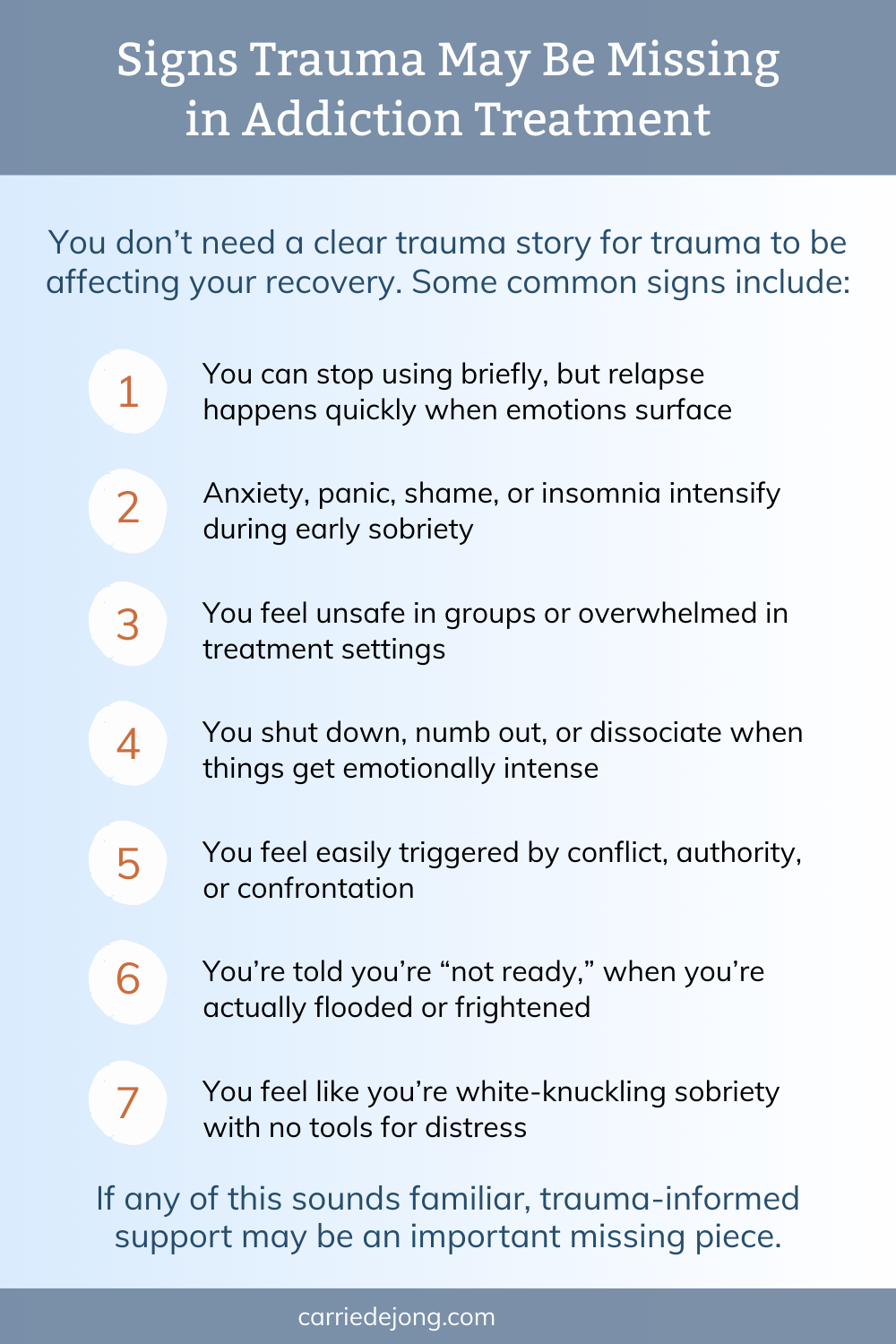
Signs Trauma May Be Missing in a Recovery Plan
You don’t need a clear trauma story for trauma to be affecting recovery. You might notice:
You can stop using briefly, but relapse happens when emotions surface
Anxiety, panic, shame, or insomnia increase in early sobriety
You feel unsafe, overwhelmed, or flooded in treatment settings
You shut down, numb out, or dissociate when things get intense
Conflict or confrontation triggers defensiveness, anger, or withdrawal
You’re told you’re “not ready,” when you feel scared or overwhelmed
Sobriety feels like white-knuckling without tools for distress
If any of this feels familiar, trauma-informed support may be an important missing piece.
Trauma-Informed Care
Trauma-informed care is guided by principles such as:
safety
trust
choice
collaboration
empowerment
These aren’t optional “extras.” They are essential for healing and recovery—especially when trauma has played a role in the story.
In Summary
For many people, addiction isn't mainly about pleasure. It's about relief. It can become a way to quiet fear, number pain, reduce shame, or escape overwhelming internal states.
If trauma has played a part in your story, reaching for relief makes sense. But you deserve support that helps you heal, not just stop.
Recovery becomes more achievable when both aspects are addressed:
The substance use
The underlying trauma that made numbing feel necessary
Healing is possible. And you don’t have to do it alone.
Continue Exploring
The ACE Study and how early trauma can influence coping and vulnerability to addiction.
Why the nervous system may struggle to settle after prolonged stress.

Understanding interoception, the body’s internal signals, and their role in regulation.