

AUTHOR • SPEAKER • THERAPIST
Carrie DeJong
Learning to Listen from the Inside Out
Much of our inner life happens without words. Sensations, shifts, and subtle cues move through the body long before we name them as thoughts or emotions. This sense shapes how we regulate, relate, and care for ourselves. This is Interoception.
My work explores how learning to listen inwardly can support emotional clarity, resilience, and well-being — especially in lives shaped by stress, trauma, or long-standing coping patterns.
Rather than fixing or overriding the body, this approach invites curiosity, balance, and trust.
FREE GUIDE
Begin with a Simple Practice
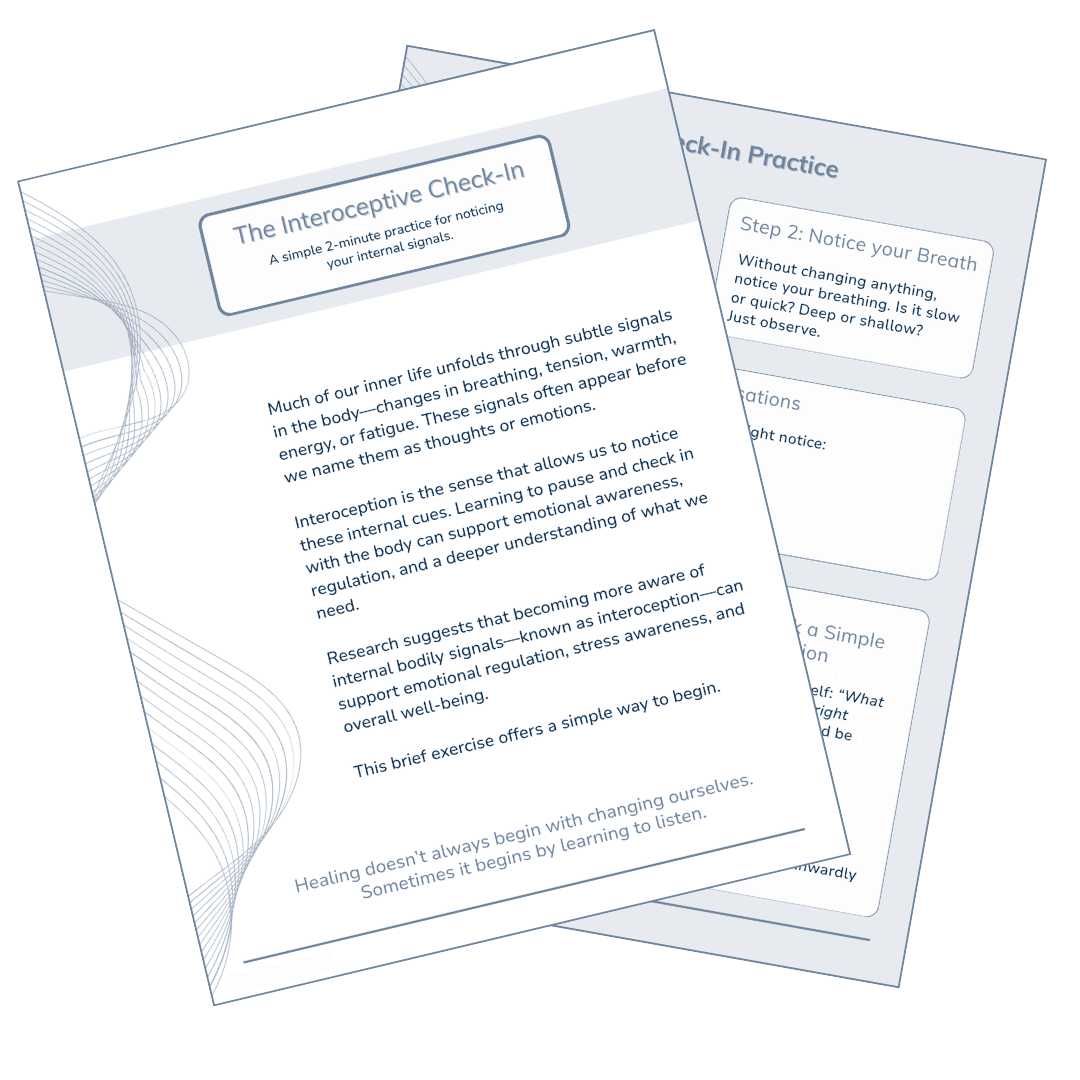
Research suggests that becoming more aware of internal bodily signals supports emotional awareness, regulation, and well-being. Your Introception practice can start by simply noticing what is happening inside the body. It’s a simple exercise you can use at any moment during the day—before a conversation, during stress, or whenever you want to check in with yourself.
I created a short guide called The Interoceptive Check-In—a gentle two-minute practice for pausing, noticing internal signals, and reconnecting with the body. You’ll also receive a companion guide: The Language of Sensation. It’s a simple way to find words for what you’re noticing in your body.
RESOURCE ARTICLES
The patterns that trouble us most—stress, emotional overwhelm, compulsive habits, or addiction—begin as attempts to cope with difficult internal states. When we don’t understand what our body and nervous system are trying to manage, we often reach for whatever brings relief in the moment. Over time, those strategies can begin to shape our lives in ways we didn’t intend.
The articles below explore some of these patterns and how learning to recognize our internal signals can begin to change them.
Understanding Coping Patterns
The Impacts of Addiction
Why do patterns repeat?
Why can’t I relax?
Why does this keep happening?
What is my body trying to tell me?
BOOK LAUNCH
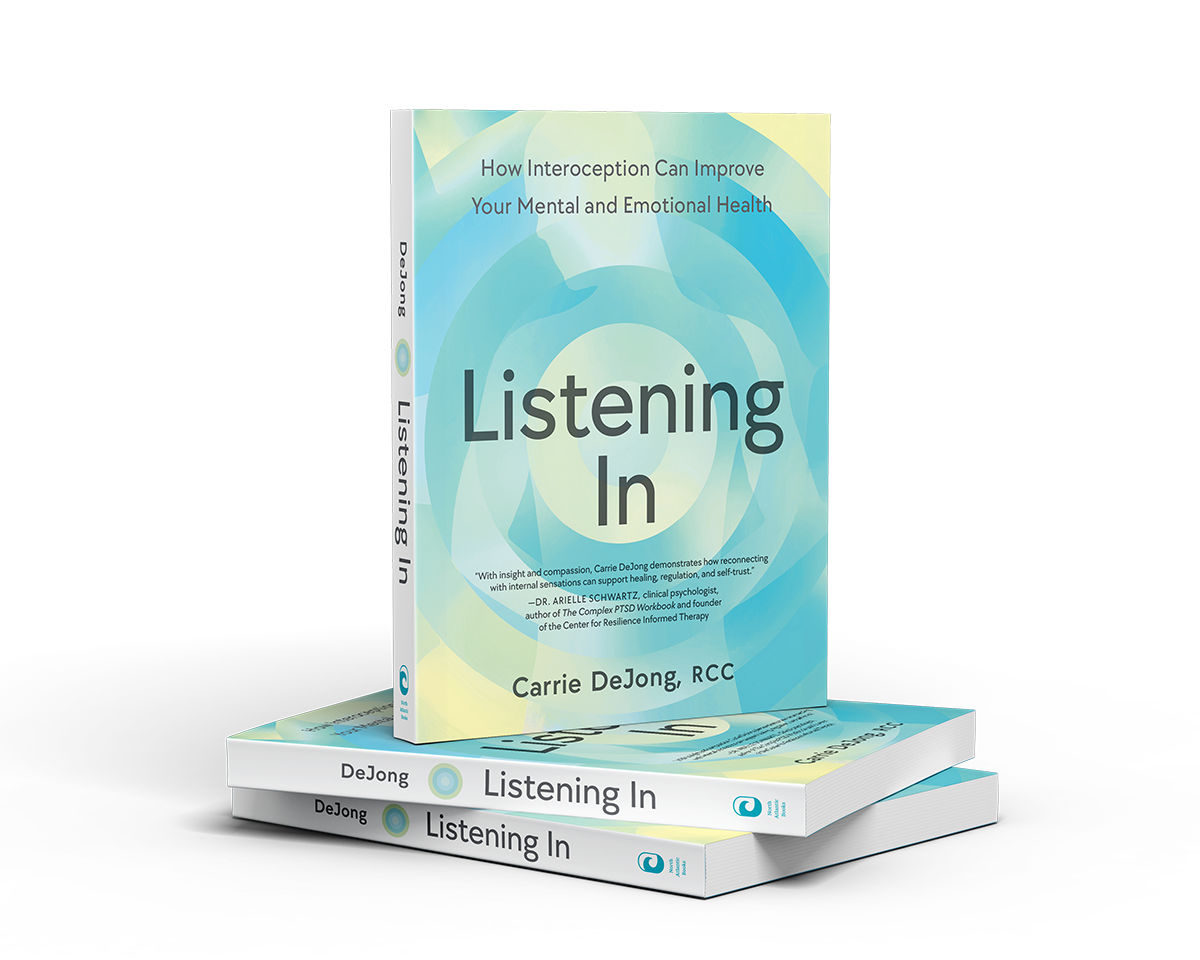
Listening In
How Interoception Can Improve Your Mental and Emotional Health
Coming October 2026 — North Atlantic Books
Listening In is an upcoming book about the body’s internal language—and what becomes possible when we stop overriding it and begin to listen. Blending neuroscience, clinical insight, and lived experience, the book explores how interoceptive awareness shapes emotional life, mental health, and our sense of self.
This work is written for readers curious about the mind–body connection, for clinicians and helpers, and for anyone open to slowing down, noticing more, and learning to relate to the body as a source of information and care instead of a problem to solve.

Explore More Of What Interests You
UNDERSTANDING INTEROCEPTION
Learn about interoception, experiment with interoceptive practices, and explore your interoceptive profile.
ABOUT CARRIE
Carrie offers training and workshops on interoception, trauma, addiction, and nervous system-informed mental health.
SPEAKING & WORSHOPS
Carrie DeJong is a therapist, author, and speaker whose work bridges neuroscience, trauma research, and lived human experience.