
Adverse Childhood Experiences (ACEs): How Early Trauma Shapes Health and Addiction
“Trauma is perhaps the most avoided, ignored, belittled, denied, misunderstood, and untreated cause of human suffering.” Peter Levine

When we try to understand the often baffling behaviors linked to addiction, it’s helpful to start with a simple but important shift: addiction is rarely the original problem. More often, it begins as a solution.
When we say “the problem is the problem,” we’re pointing to something deeper than substance use itself. Addiction is often a response to distress—an attempt to cope with internal experiences that feel unbearable, overwhelming, or impossible to regulate. Seen this way, substance use isn’t a moral failing or a lack of willpower; it’s often a coping strategy.
Addiction as a Way to Regulate What’s Inside
Substances and compulsive behaviors often start as a way to fix something—to change how the body feels. They may temporarily ease emotional pain, quiet anxiety, reduce tension, provide relief, or offer a sense of calm or connection.
What’s often missing from conversations about addiction is an understanding of interoception—the body’s ability to sense and interpret internal signals like heart rate, hunger, pain, emotional arousal, and stress. Interoception plays a central role in self-regulation. When it is disrupted, managing internal states becomes much harder.
Among researchers and clinicians, there is growing awareness that trauma—particularly early and chronic trauma—significantly affects interoceptive processes. When the body’s internal signals become confusing, overwhelming, or muted, individuals often seek external methods to regulate their emotions.
“That Wasn’t Trauma”—Or Was It?
Many people struggling with addiction don’t identify as having experienced trauma. They may minimize their experiences, saying things like “that wasn’t trauma,” “that’s just the way it was,” or “others had it far worse.” This is incredibly common.
As Peter Levine reminds us:
“When it comes to trauma, what we don’t know can hurt us. Not knowing we are traumatized doesn’t prevent us from having problems caused by it.”
Trauma isn’t defined by the event alone—it’s defined by how the nervous system responds. Experiences that overwhelm a child’s ability to cope can leave lasting imprints on stress regulation, emotional awareness, and the ability to feel safe in one’s own body.
Childhood Trauma and the Body’s Alarm System
Research consistently shows that early life stress and trauma significantly increase the risk of substance use and addiction later in life. Trauma expert Bessel van der Kolk has emphasized that trauma has some of its most pervasive effects during the first decade of life, when the nervous system and regulatory capacities are still developing.
One of the most influential bodies of research in this area is the Adverse Childhood Experiences (ACE) Study.
What the ACE Study Reveals
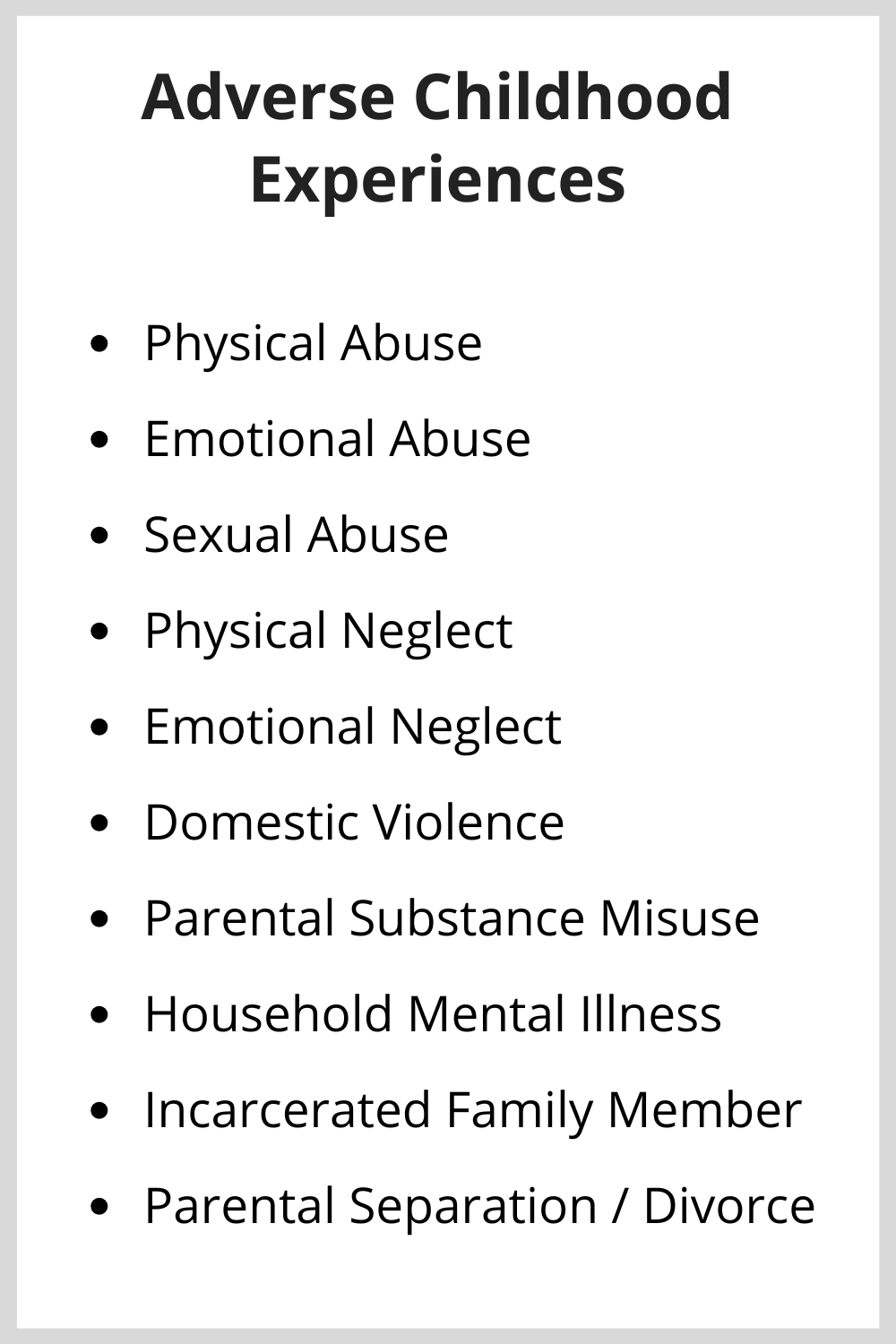
In the 1990s, Dr. Vincent Felitti and Dr. Robert Anda led a landmark study of over 17,000 participants examining the relationship between childhood adversity and adult health outcomes. The study identified ten categories of common childhood trauma, including abuse, neglect, and household challenges such as parental substance use, mental illness, violence, or incarceration.
Participants were asked about their childhood experiences and later health outcomes. The findings were striking.
51% reported 1–3 ACEs
16% reported 4 or more ACEs
As ACE scores increased, so did the risk for serious health concerns—including substance use disorders.
Compared to individuals with no ACEs, those with four or more ACEs were:
Twice as likely to smoke
Seven times more likely to develop alcohol use disorder
Ten times more likely to have injected street drugs
Here are additional statistics:
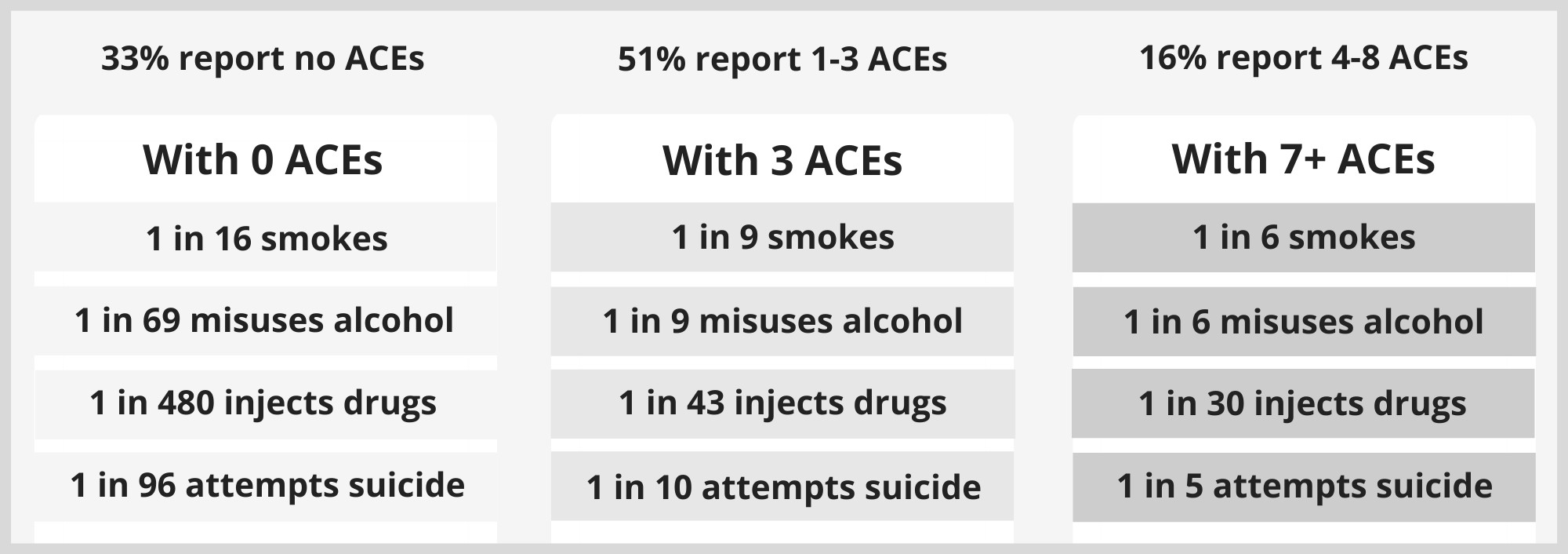
The ACE Study illustrates a clear progression: early adversity increases emotional and physiological stress, which compromises regulation and coping. Over time, people often turn to high-risk behaviors—including substance use—to manage internal distress.
Trauma, Interoception, and Dysregulation
Childhood trauma doesn’t just affect thoughts or memories—it shapes how the body processes internal signals.
Traumatic stress can keep the body’s alarm system stuck in survival mode. For some, this shows up as hyperarousal—a state in which the nervous system is constantly on high alert. People may feel watchful or tense much of the time, react strongly to stress, and experience physical symptoms such as tight muscles, headaches, digestive discomfort, or ongoing sleep problems. For others, the body responds by shifting into hypoarousal, a low-energy protective state marked by exhaustion, emotional numbness, dissociation, or a feeling of being disconnected from one’s body or inner experience. Both patterns reflect the nervous system’s attempt to cope with overwhelming stress, and both can make it harder to feel regulated, safe, or at ease internally.
In both cases, interoceptive signals can feel unsafe, overwhelming, or inaccessible. When the body doesn’t reliably signal calm, safety, or comfort, substances and compulsive behaviors may become attempts to regulate what the nervous system cannot manage on its own.
From this perspective, addiction can be understood as an effort to:
Quiet overwhelming sensations
Escape chronic internal stress
Feel something instead of numbness
Create a sense of control over bodily states
Coping Through Numbing, Distraction, and Mood-Altering
When people are overwhelmed by unresolved trauma, turning to self-medication makes sense. Alcohol, drugs, and certain behaviors can temporarily change internal sensations—reducing anxiety, dampening emotional pain, or creating relief from chronic tension.
But as Dr. Felitti observed:
“Addiction is a readily understandable attempt to relieve prior life traumas. Because it is difficult to get enough of something that doesn’t quite work, the attempt is ultimately unsuccessful.” (The Origins of Addiction, 2004)
The relief doesn’t last. Over time, reliance on substances often deepens dysregulation rather than resolving it.
The Problem Is the Problem—and There Is Help
If you or someone you love struggles with substance use or an addiction disorder, it’s important to look beneath the behavior and explore what the body may be trying to manage. Childhood trauma, chronic stress, and disrupted interoception may be the problem that substance use is attempting to solve.
Trauma-informed therapy that attends to both the nervous system and interoceptive awareness can help people reconnect with their internal signals, build safer ways to regulate distress, and develop coping strategies that don’t rely on numbing or avoidance.
Continue Exploring
Understanding how early trauma increases the risk of suicide.
How trauma responses can influence addictive cycles.
How altered internal signals affect emotional awareness and mental health.