
When Stress and Substance Use Collide
Stress doesn’t just make life harder — it can quietly shape how and why we reach for alcohol, cannabis, or other ways to numb out.

Self-Medicating Stress
Tense, pressured, and stressed out. For many people, stress is the constant background noise of modern life. And it’s easy to see why. There are countless triggers that activate a stress response: finances, climate anxiety, politics, raising kids, health issues, school or work demands, traffic, and the relentless pace of everything.
But here’s what we often underestimate: stress makes us sick. It affects our physical health, emotional well-being, and mental clarity in deep ways. And it can influence our decisions in ways that aren’t always in our best interest.
Many try to manage stress by turning to alcohol, cannabis, or prescription sedatives like benzodiazepines. In the short run, these can seem like a quick relief. But over time, they often backfire.
Stress makes substance use worse. And substance use makes stress worse. Much worse.
Life gets messy when stress and substance use collide.
Sources of Stress
Stress doesn’t come in just one form.
Acute stress: Acute stressors are short-term situations with a clear cause — such as a traffic jam, a brief illness, an argument with a loved one, or a work deadline. Our bodies are well-equipped to handle these (hopefully) brief challenges. Once the situation is resolved, the nervous system is meant to return to its normal state.
Chronic stress: Chronic stressors are those that don’t resolve easily or quickly. They include financial struggles, unhealthy work environments, painful relationships, long-term insomnia, caregiving burdens, or a lack of social support.
Prolonged stress is what taxes the nervous system the most — and it’s much harder for the body to recover when stress becomes a long-term condition.
Anticipatory stress: Humans have a unique ability to trigger a stress response just by thinking about a future problem. Worrying about finances, an upcoming job interview, a medical test, or a difficult conversation can activate the same physiological stress response as actually experiencing it. This is where stress and anxiety overlap.
What Stress Does in the Brain and Body
Our autonomic nervous system (ANS) plays a central role in how we respond to stress.
When we face a stressful situation, the sympathetic branch of the nervous system activates — the part responsible for mobilization, vigilance, and fight-or-flight responses. The body releases hormones like cortisol and adrenaline to provide the energy needed to respond.
A simple way to think about this system is:
The sympathetic system is the gas pedal
The parasympathetic system is the brake
When the gas pedal is engaged, some functions increase (heart rate, blood pressure), while others decrease (digestion, immune function, rest, and repair).
The parasympathetic system is the branch that helps the body return to calm. It supports digestion, restoration, sleep, healing, and connection.
Ideally, once the stressor passes, the gas pedal eases off, and the brake can do its job.
But what happens when the stress doesn’t pass? What happens when the nervous system keeps the gas pedal pressed down for long periods? That’s when the cost begins to show up.
Stress also affects what we feel inside. Tightness in the chest, nausea, restlessness, buzzing energy, throat, a racing heartbeat, and a clenched jaw — these internal signals are part of interoception: the body’s ability to sense and interpret what’s happening inside us.
When stress becomes chronic, those sensations can start to feel unbearable.
The Downside of Stress
Chronic stress affects nearly every aspect of life. It shows up in the body, emotions, and behavior.
Physical Symptoms
Fatigue
Insomnia
Headaches
Muscle pain
Stomach upset
Emotional Symptoms
Anxiety
Irritability or anger
Depression
Restlessness
Lack of motivation
Behavioral Symptoms
Avoidance
Isolation and disconnection
Decreased self-care
Tension-reduction behaviors (overeating, smoking, or scrolling
Increased substance use
When your overall stress load is high, even minor stressors can feel overwhelming. That’s why someone might snap at a slow driver, feel anger at a small inconvenience, or lose patience with a toddler.
We’re not just reacting to immediate stress — we’re also reacting to the stress our entire nervous system carries.
Trauma Makes Stress Hit Harder
Past trauma also shapes the stress response.
People who faced adversity in childhood often react to stress differently than others. When triggered, they might respond emotionally, become more defensive, see threats that aren't there, or feel overwhelmed sooner than the situation “should” require.
Early trauma can tune the nervous system toward sensitivity. In other words, trauma can train the body to stay ready for danger.
For many trauma survivors, internal sensations don’t feel neutral — they feel unsafe. A racing heart, tight chest, nausea, or shakiness may not register as “stress.” It may be perceived as panic, danger, or a loss of control.
This is one reason substance use can become so compelling: it changes the internal experience.
How Stress Impacts Substance Use
Stress plays a significant role in the development and persistence of substance use problems.
Here are some important things to consider:
Men with high-stress jobs are at greater risk for addiction — and the risk rises even more when the work is physically demanding.
For middle-aged women, stressful life events such as divorce or the death of a loved one increase the likelihood of substance dependence.
Although teenagers experiment with cannabis for many reasons, stress relief is one of the most common reasons they continue or escalate use.
The risk of addiction grows when substances are used mainly to cope with stress.
Stress also raises the chance of relapse for someone in recovery.
Why Self-Medicating Makes Sense (and Why It Backfires)
There is a clear connection between stress and substance use. One fundamental truth is that problematic substance use often starts as a way to cope or survive.
Alcohol, cannabis, opiates, and sedatives can be extremely effective — at least temporarily — at decreasing the uncomfortable symptoms of stress. They can reduce irritability, quiet worry, dampen emotional intensity, and help people fall asleep.
The Self-Medication Hypothesis (SMH), developed by psychiatrist Edward Khantzian, sees substance use as a way to manage overwhelming emotions and distress. Khantzian concluded that the heart of addiction isn’t about seeking pleasure — it’s about suffering.
He posed a powerful question: “What does this substance do for you?”
When we view substance use from this perspective, it becomes easier to understand why people continue using — even when they desperately want to stop.
Substance Use Doesn’t “Solve” Stress - It Just Numbs It
Using substances to manage stress is ultimately a losing battle.
Temporarily numbing stress doesn’t resolve its underlying cause. It also interferes with learning healthier, more adaptive coping strategies.
Returning to the gas-and-brake-pedal metaphor: Stress is like pressing the gas pedal. The sympathetic system activates — and often remains active. Substance use doesn’t truly turn it off. It often just blunts the internal signals of stress.
And this matters because stress isn’t just an external issue — it’s an internal experience. The racing heart, tension, restlessness, dread, irritability, and exhaustion are felt throughout the body. Alcohol and cannabis often act quickly because they diminish awareness of those signals.
However, research also shows that many substances increase the stress response in the body over time. They may provide short-term relief, but they often worsen anxiety, sleep quality, mood stability, and resilience.
It’s like throwing on the emergency brake while the engine is revving. It doesn’t create regulation. It creates strain.
As physician and ACE Study co-author Vincent Felitti put it:
“It’s hard to get enough of something that almost works.”
What Helps Instead
If you’re using alcohol, cannabis, or medication to cope with stress doesn’t mean you’re weak. It means your nervous system is overloaded.
The goal isn’t to shame the coping strategy. The goal is to build enough support and regulation so that you don’t need it as often.
Some healthier ways of working with stress include:
movement and exercise
mindfulness or meditation
breathwork
laughter, play, and time in nature
meaningful connection with supportive people
therapy to address chronic stress, anxiety, or trauma-related patterns
And sometimes the key step is just learning to recognize what’s happening in your body before reaching for relief. Because the more clearly you can recognize your internal state, the more choices you have.
Want a Deeper Model of This Cycle?
If you’d like to explore this topic more deeply, I also recommend reading:
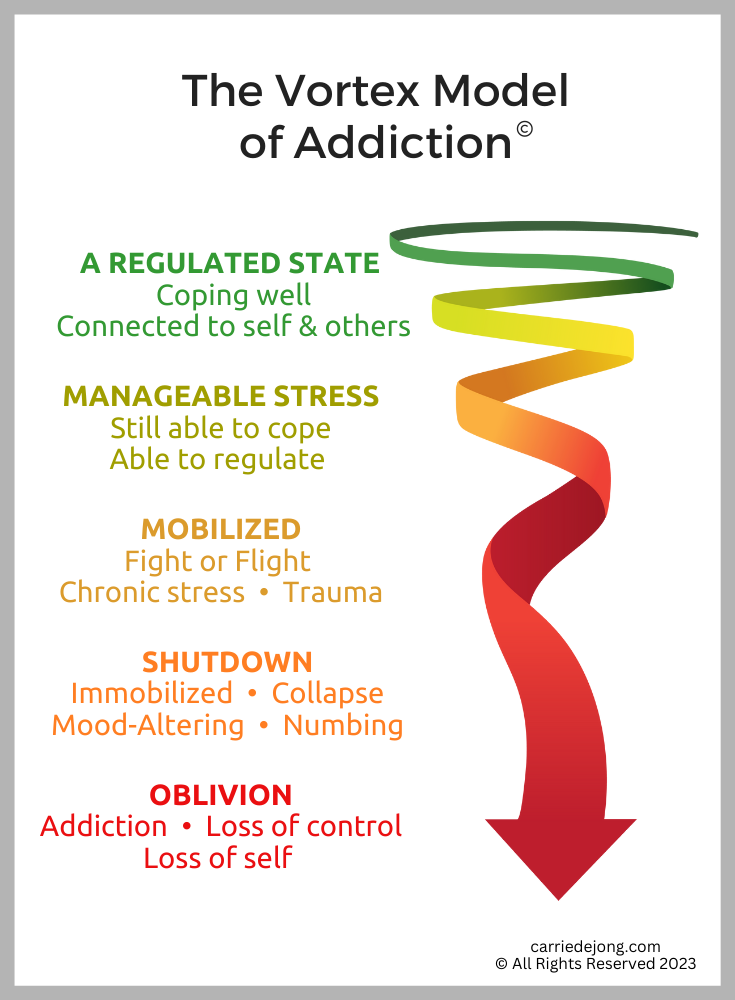
The Vortex Model of Addiction — a framework for understanding how chronic stress, trauma symptoms, nervous system dysregulation, and mood-altering can pull someone deeper into addiction, and what recovery might look like.
The Vortex Model speaks not only to the journey into addiction — but also to the process of healing.
Before you go
If stress and substance use have become intertwined in your life, you’re not alone. This pattern is much more common than most people realize — and it makes sense from the nervous system's perspective. With the right support, new coping strategies, and a healthier relationship with what you feel inside, it is possible to break free from the cycle and find genuine relief.
Continue Exploring
How anxiety responses can reinforce substance use.
Why stress can intensify cravings.
Understanding nervous-system regulation during stressful experiences.