
7 Tools for Addiction Recovery
Recovery isn’t just about stopping a substance—it’s about rebuilding the ability to feel, cope, and re-engage with life in healthier ways.
Recovery is often described as “getting sober” or “stopping.” But anyone who has experienced addiction knows it’s more complicated than that. Real recovery isn’t just about eliminating a substance or behavior—it involves addressing what made it seem necessary in the first place and finding ways to live that feel more manageable, meaningful, and steady.
Understanding the role of the nervous system is one of the most important aspects of recovery.
Regulated vs. Stressed: A Simple Nervous-System Lens
When we talk about nervous system regulation, we're actually talking about something quite simple rather than complex.
A regulated nervous system is one that can handle stress without getting stuck in it.
When you’re regulated, you can still experience stress, sadness, frustration, or fear—but your system can process those feelings and return to more balance. You’re better able to think clearly, stay connected, and make choices that align with your values.
A stressed nervous system, on the other hand, often feels like being stuck in survival mode. You might feel on edge, overwhelmed, irritable, exhausted, shut down, numb, or unable to settle. In that state, cravings tend to get stronger—not because you’re weak, but because your body is seeking relief.
This is where an interoception perspective matters: many cravings are caused by internal sensations—such as tightness, agitation, emptiness, restlessness, shame, fatigue, and dread. Substances and compulsive behaviors can quickly alter internal states, which is why they become such powerful coping tools.
The good news is that many recovery tools work for the same reason: they help your nervous system shift out of stress and back toward regulation.
7 Tools That Support Recovery
1. Healthy Relationships Are Vital
We're built for connection. Our mental, emotional, and physical health is deeply shaped by the quality of our relationships.
Supportive connection is one of the most powerful ways to help the nervous system regulate. When we feel safe with someone else, the body tends to settle. We breathe differently. Our muscles relax. We feel less alone inside our own experience.
There might not be a single “secret” to recovery, but healthy relationships are among the strongest protective factors we have.
Try this:
Reconnect with people who matter. Make amends where appropriate. Go to a meeting. Talk with a sponsor. Reach out to a therapist. Join a class or group. Build connection on purpose.
2. Train Your Brain to Notice What’s Still Good
Our brains are built to scan for danger. It’s not pessimism—it’s survival wiring. But when someone has experienced addiction, trauma, or chronic stress, that threat-detection system often becomes overactive.
Part of recovery is learning to widen your focus again—to include what’s safe, steady, calm, supportive, or even just neutral.
This isn’t toxic positivity; it’s nervous system retraining.
Try this:
Notice one thing that’s working today. One moment of ease. One small success. One supportive person. One choice you made that helped you stay grounded.
3. Gratitude Helps Shift Internal State
Gratitude is sometimes misunderstood as a forced attitude, but in recovery, it can be a powerful tool for calming the nervous system.
It gently redirects focus from what’s wrong to what’s supportive, meaningful, or life-affirming. Over time, this change influences how the body feels internally.
Gratitude also helps counter the isolation and self-focus that often comes with addiction.
Try this:
Write a short gratitude list. Thank someone who helped you. Notice what your body feels like when you take in something good—even for a few seconds.
4. Laughter Is Good Medicine
There’s a reason laughter feels like relief: it changes the nervous system.
Laughter helps release tension, interrupts rumination, and foster connection. It can shift the body from a stressed state to a lighter, more regulated one.
It also reminds people in recovery that joy is still possible—and that matters.
Try this:
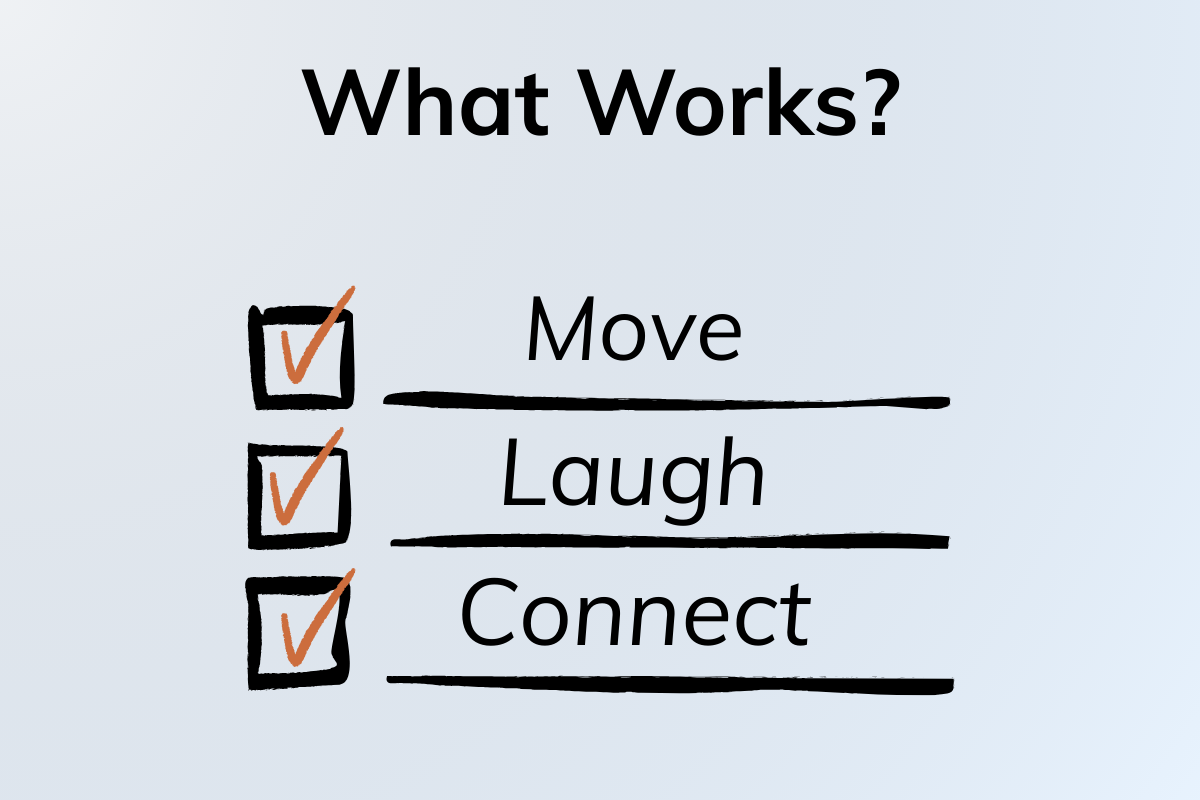
Watch something funny. Spend time with people who make you laugh. Listen to a comedian. Play a game. Let your nervous system experience lightness again.
5. Keep Moving (Even Gently)
Exercise is one of the most reliable tools we have for recovery—not because it fixes everything, but because it supports regulation in the body.
Movement aids stress relief. It enhances sleep, lifts mood, and boosts energy. It also creates structure and helps people feel more connected to their bodies in a grounding and empowering way.
You don’t need to “crush it.” You just need to move.
Try this:
Walk. Stretch. Swim. Dance. Ride a bike. Lift weights. Take a class. Choose something you can actually sustain.
6. Mindfulness Helps You Stay Present Without Numbing
Mindfulness isn’t about clearing your mind. It’s about learning how to be with your experience without being consumed by it.
In recovery, mindfulness can help with:
cravings
emotional overwhelm
anxiety
shame spirals
impulsive urges
stress reactivity
It also strengthens interoceptive awareness—your ability to notice what’s happening inside before it becomes unmanageable.
Try this:
Notice your breath. Feel your feet on the floor. Pay attention to what you see and hear. Take one minute to observe what your body is doing without trying to fix it.
7. The 1% Factor
Recovery can feel overwhelming. When people feel overwhelmed, the nervous system often shifts into a stress response, making cravings and avoidance stronger.
This is where the 1% factor becomes a powerful tool:
Even when you feel stuck, there is always a small step you can take toward recovery.
Sometimes, the tiniest action is enough to break the cycle.
Try this:
Go for a 5-minute walk. Drink water. Make a cup of tea. Text someone safe. Take a shower. Write one sentence. Sit outside for two minutes. One small step matters.
Before You Go
Recovery is not a straight line, and it isn’t a test of willpower. It’s a process of rebuilding safety inside your body, your relationships, and your daily life.
The more you practice what supports regulation—connection, movement, mindfulness, gratitude, laughter, and small consistent steps—the less your nervous system needs substances or compulsive behaviors to cope.
Find what works for you… and keep returning to it.
Continue Exploring
Encouragement for taking meaningful steps toward recovery.
Understanding why a sober month can feel challenging.
Learn about interoception and how this internal awareness supports regulation and change.