
Why Interoception Matters
Much of our inner life unfolds quietly beneath awareness. Signals from the heart, lungs, gut, muscles, and other internal systems constantly inform the brain about the body’s current state.

Much of our inner life unfolds quietly beneath awareness. Signals from the heart, lungs, gut, muscles, and other internal systems constantly inform the brain about the body’s current state.
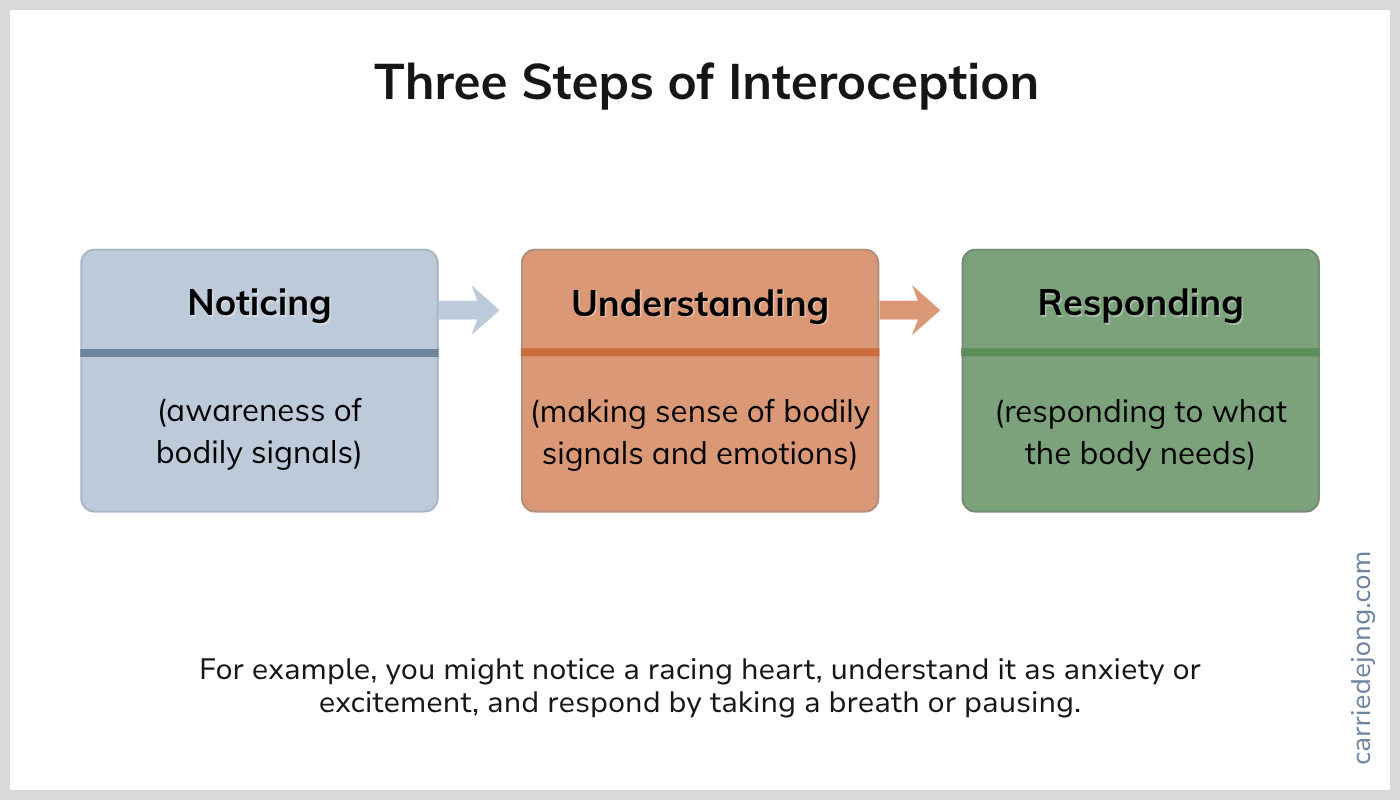
Interoception is the sense that allows us to perceive and interpret internal signals. It plays an important role in how we experience emotions, regulate stress, make decisions, and maintain well-being.
When interoceptive signals are clear and trusted, they provide valuable information that helps guide daily life. When these signals become disrupted, the effects can ripple through emotional experience, behavior, and mental health.
Interoception and Emotional Experience
Emotions are not purely mental events. They arise in part from the brain’s interpretation of signals coming from within the body—changes in heart rate, breathing patterns, muscle tension, and other internal cues.
Interoception helps translate these signals into emotional awareness. When people can sense and interpret internal signals accurately, they are often better able to recognize and regulate emotions.
Researchers increasingly view interoception as a bridge between physiological signals and emotional experience, helping explain how bodily changes become feelings such as calm, anxiety, excitement, or sadness.
Learn more about how bodily signals help shape emotions.
Interoception and Stress Regulation
The body constantly monitors internal changes related to stress and safety. Signals from the cardiovascular system, breathing patterns, digestive activity, and muscle tension provide ongoing feedback about how the body is responding to the environment.
Interoception helps the brain interpret these signals and adjust responses accordingly. When internal cues are noticed earlier—such as subtle shifts in breathing or tension—it can support more flexible responses to stress.
In this way, interoception plays a role in how the body maintains balance and adapts to changing demands.
Interoception links signals from the body with emotional experience and behavior.
Interoception as a Transdiagnostic Process
Transdiagnostic refers to a common underlying process that shows up across many different mental health struggles. Research increasingly suggests that differences in interoception are linked to a wide range of mental health challenges.
Difficulties noticing, interpreting, or trusting internal signals have been observed in conditions such as:
anxiety disorders
depression
trauma-related conditions
eating disorders
addiction
panic disorder
somatic symptom disorders
Because interoception influences emotional awareness, stress regulation, and decision-making, researchers increasingly view it as a transdiagnostic process—one that may play a role across many different psychological conditions.
Research Highlight: Interoception and Mental Health
A major review of interoception research by Khalsa and colleagues (2018) highlights the growing recognition of interoception as a fundamental process in both physical and mental health.
Their work suggests that altered interoceptive processing may contribute to many psychiatric conditions and may represent an important target for treatment approaches across diagnostic categories.
(Khalsa, S. S., et al. “Interoception and Mental Health: A Roadmap.” Biological Psychiatry: Cognitive Neuroscience and Neuroimaging (2018).
When Interoceptive Processes Become Disrupted
For many people, interoceptive signals do not always feel clear or reliable. Experiences such as chronic stress, trauma, illness, or prolonged emotional strain can alter how internal signals are perceived and interpreted.
When interoception is disrupted or altered, internal cues may feel confusing, overwhelming, or difficult to trust. Some people may feel flooded by bodily sensations such as racing heartbeats or breathlessness. Others may experience the opposite—feeling disconnected or numb to internal signals.
These patterns can shape emotional experience and behavior in subtle but powerful ways. Signals intended to guide regulation and decision-making may instead feel like threats or fade from awareness altogether.
Understanding these disruptions has become an important focus in modern research on trauma, anxiety, addiction, and emotional health.
Interoception and Everyday Life
Interoception also influences everyday choices in ways we often don’t notice.
Subtle sensations such as comfort, tension, energy, or fatigue can shape how we evaluate situations and make decisions. Researchers sometimes describe these internal cues as somatic markers—bodily signals that help the brain anticipate outcomes and guide behavior.
Learning to notice these signals more clearly can strengthen emotional awareness, self-trust, and decision-making.
Interoception Can Be Strengthened
Interoceptive awareness is not fixed. Research suggests that practices such as mindful attention to breathing, body scanning, movement, and somatic approaches to therapy can strengthen awareness of internal signals.
As people learn to notice and interpret these signals more clearly, many report improvements in emotional regulation, resilience, and well-being.
These practices form the foundation of many emerging approaches focused on restoring healthy communication between the body and the brain.
Listening In
Interoception represents one of the body’s most important communication systems.
When internal signals become clearer and easier to interpret, they provide valuable information that supports regulation, connection, and well-being.
In many ways, healing may begin by learning to listen inwardly again.
Continue Exploring
An introduction to interoception, the body’s internal sensing system.
How internal signals can feel confusing, overwhelming, or unclear.
How distraction, habits, and stress can pull attention away from within.
Explore your patterns of noticing, understanding, and relating to internal signals