
Three Steps of Interoception
Here is a simple way to understand how we connect with the body’s signals.
Interoception can sometimes seem like a complicated idea. It involves the brain, the body, and the ongoing stream of internal signals that shape how we feel and react to the world.
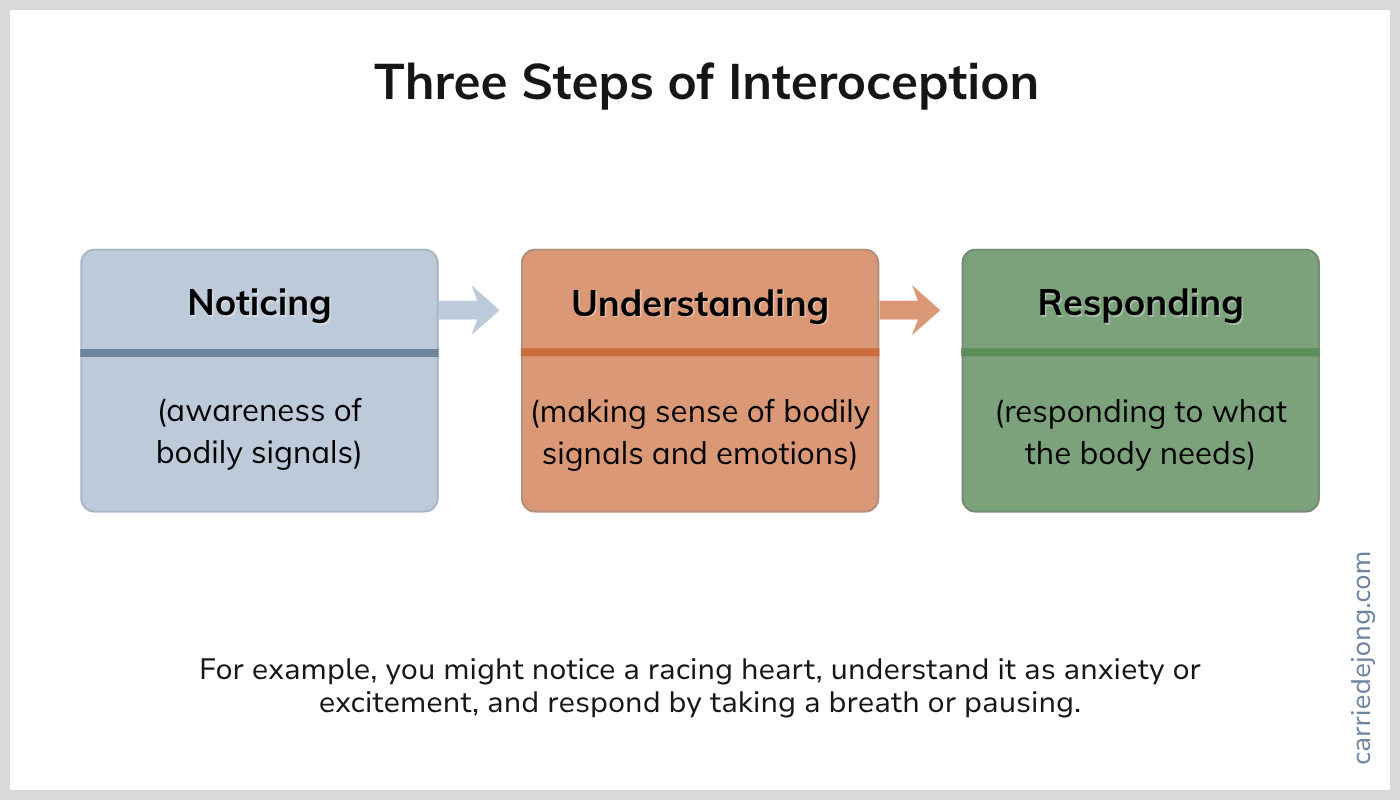
One way to make sense of interoception is to think of it as a simple, ongoing process with three parts:
Noticing, understanding, and responding.
These steps are not separate or strictly linear. They often overlap and repeat in an ongoing cycle. However, describing them this way can make it easier to see how interoception appears in everyday life.
Step 1: Noticing
The first step in interoception is noticing what is happening in the body.
This might include:
changes in breathing
a racing or steady heart
tension in the shoulders
sensations in the stomach
shifts in energy or alertness
Many of these signals are subtle and easy to overlook, especially when attention is directed outward.
Noticing does not require analysis. It begins with simple awareness:
What is happening in my body right now?
Some aspects of interoceptive awareness relate to how easily we notice internal signals and how well we can direct attention toward them. For some people, signals such as breathing or muscle tension are immediately apparent. For others, these signals may be quieter or easier to miss, particularly during busy or demanding moments.
Even brief moments of noticing can begin to strengthen this awareness over time.
Step 2: Understanding
The second step involves making sense of what those signals might mean.
The brain uses context, past experience, and current circumstances to interpret body signals.
For example:
a racing heart might be interpreted as anxiety before public speaking
the same sensation might feel like excitement before a meaningful event
a tight chest might reflect stress, effort, or emotional tension
This is the stage where body signals begin to take on emotional meaning.
Interpreting these signals is closely linked to emotional awareness. Changes in the body often shape how emotions are experienced, and over time, people may begin to recognize patterns between certain sensations and emotional states.
This process is sometimes described as listening to the body—developing a sense of what internal signals may be communicating in different situations.
At times, interpretation can feel uncertain or confusing. This is a normal part of how the brain and body work together, especially in moments of stress or when past experiences influence expectations.
Step 3: Responding
The third step is how we respond to those signals.
Responses may include:
resting when the body feels fatigued
taking a breath during moments of stress
seeking connection when feeling unsettled
continuing an activity when the body feels energized
Some responses happen automatically. Others become more intentional as awareness increases.
Over time, responding to body signals can become more intuitive. Some people begin to develop a sense of trust in these signals—recognizing that they often provide useful information about rest, effort, or emotional needs.
This does not mean every signal is clear or easy to interpret. Rather, it reflects a growing ability to respond in ways that support balance and well-being.
How the Steps Work Together
These three steps are part of an ongoing process:
Noticing → Understanding → Responding → Noticing again
Each step influences the next.
When awareness is clearer, responses may feel more aligned with what the body needs. When signals are missed or misunderstood, responses may feel less effective.
This is not a failure. It reflects the complexity of the brain-body interaction in real time.
Everyday Example
Imagine someone preparing to give a presentation.
Noticing: They become aware of a racing heart and tight shoulders.
Understanding: They interpret these sensations as anxiety.
Responding: They take a few slow breaths or pause before beginning.
In a different context, the same sensations might be understood as excitement, leading to a different response.
When the Steps Feel Less Clear
At times, these steps may feel harder to recognize.
People may:
overlook body signals
feel unsure what sensations mean
react automatically without awareness
These patterns are common and often reflect how stress, habits, or past experiences shape awareness.
You can learn more about this in When Interoception Becomes Altered.
Research Insight: Different Aspects of Interoceptive Awareness
Interoception is not a single ability. People can vary in how they notice body signals, how they interpret those signals, and how they respond to them.
Research has identified several different aspects of interoceptive awareness. These include:
noticing internal sensations
directing attention toward the body
recognizing connections between body signals and emotions
using awareness to support regulation
developing a sense of trust in the body’s signals
The Multidimensional Assessment of Interoceptive Awareness (MAIA) was developed to describe these different ways people experience and relate to their internal signals.
These different aspects of awareness are reflected in how we notice, understand, and respond to the body’s signals.
Instead of measuring interoception as “high” or “low,” the MAIA emphasizes that awareness can be strong in some areas and less developed in others. This helps explain why someone might easily notice physical sensations but feel unsure about their meaning— or why another person may understand emotional patterns but struggle to notice early body signals.
If you’re curious about how these different aspects of interoception show up for you, you can explore them further through the MAIA self-assessment.
It’s not a test, but a way of noticing how you tend to experience and relate to your body’s signals.
Strengthening the Three Steps
Interoceptive awareness can grow gradually over time.
Often it begins with:
brief moments of noticing
gentle curiosity about sensations
small pauses before responding
These small shifts can help strengthen the connection between body signals, understanding, and response.
Listening as an Ongoing Process
Interoception is not something we turn on or off. It is an ongoing process through which the brain and body remain in communication.
Noticing, understanding, and responding are simply ways of describing that process.
By becoming more familiar with these steps, it becomes possible to develop a clearer sense of how the body is communicating—and how we might begin to listen.
Continue Exploring
How the body helps shape our emotional experiences.
How awareness of the body can gently grow over time.
Explore your patterns of noticing, understanding, and relating to internal signals.
Practices to help you notice, understand, and respond to your body’s signals.