Can Interoception Be Strengthened?
Learn simple ways to begin listening to the body’s internal signals.

People differ widely in how clearly they notice the body’s internal signals. Some individuals easily recognize subtle changes in breathing, tension, or energy levels, while others may only notice these signals after they become stronger.
This often raises an important question: Can interoception be strengthened?
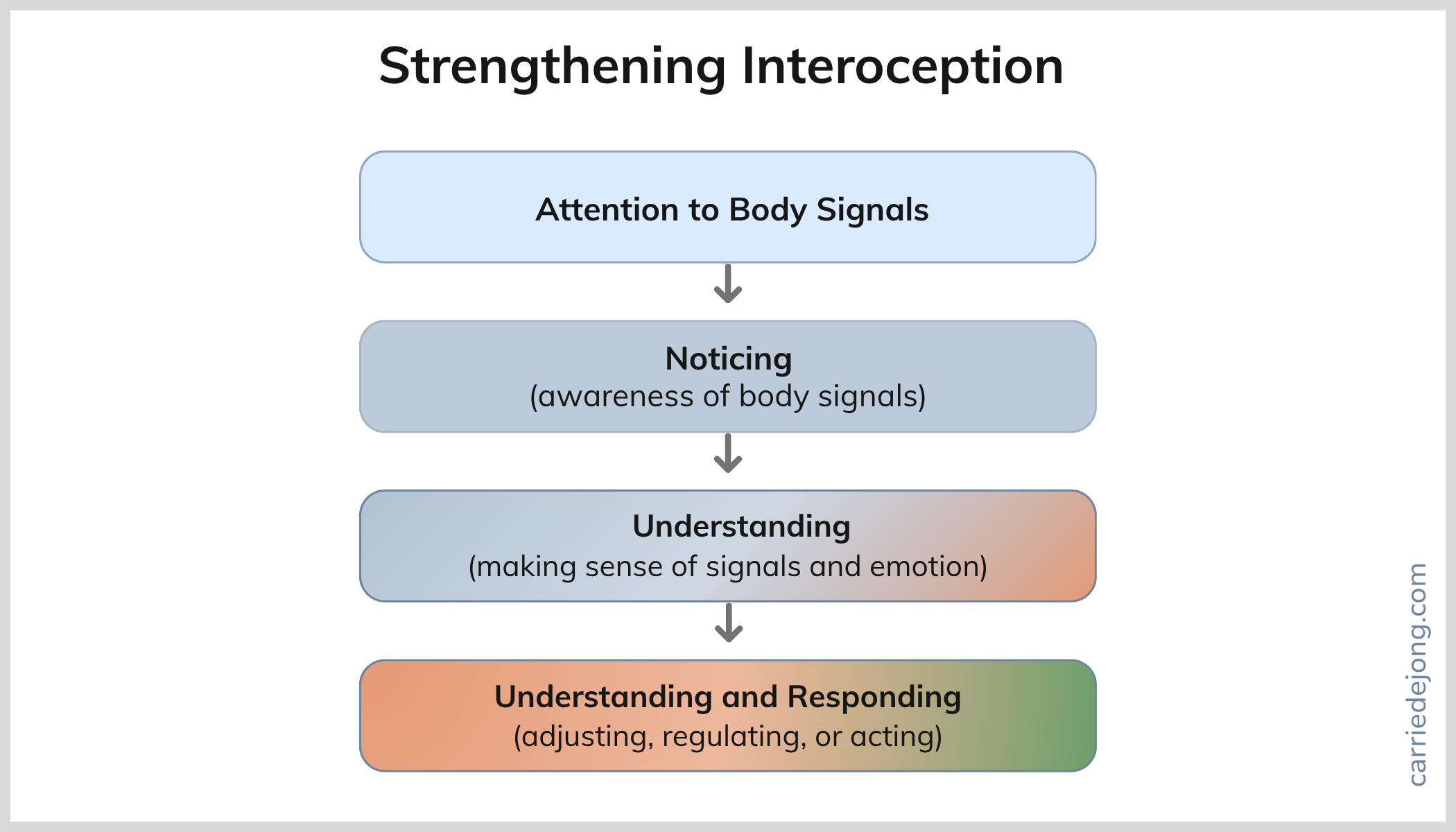
Research and everyday experience both suggest that awareness of body signals can develop over time. Just as attention to external details can become sharper with practice, awareness of internal sensations can also grow.
Strengthening interoception does not require intense focus or complicated techniques. More often, it begins with small moments of curiosity about what is happening inside the body.
Begin with Curiosity
One of the most helpful approaches to developing interoceptive awareness is simple curiosity.
Instead of trying to analyze or control bodily sensations, the goal is simply to notice what is present. A slight change in breathing, a sense of warmth in the chest, or tension in the shoulders may all provide information about how the body is responding in the moment.
Approaching these signals with curiosity rather than judgment allows awareness to develop naturally over time.
Small Moments of Noticing
Interoceptive awareness typically increases with short moments of attention during everyday activities.
These moments don't have to be long or structured. Sometimes just a few seconds of noticing can enhance awareness of internal signals.
For example, you might briefly notice:
the rhythm of your breathing while sitting or walking
areas of tension or ease in the shoulders or neck
shifts in energy throughout the day
sensations of hunger or fullness
the body’s response during moments of stress or relaxation
Over time, these small observations can make it easier to recognize patterns in how the body responds to different situations.
Interoceptive awareness often develops gradually. Small moments of noticing can build familiarity with the body’s signals over time.
Research Insight
Research on interoception indicates that gently focusing attention toward internal sensations—such as breathing, muscle tension, or heart rate changes—can enhance awareness of body signals over time. Practices that encourage noticing these sensations are commonly used in studies on interoceptive awareness and emotional regulation.
Five Simple Ways to Begin
Developing interoceptive awareness does not require formal exercises. Many people begin by incorporating brief moments of attention into everyday life.
Notice Your Breathing
Pause for a moment and notice the rhythm of your breath. Is it slow or quick, shallow or deep?
You do not need to change the breath—simply noticing it can increase awareness of internal signals.
Check in with Posture
Take a moment to sense how your body is positioned while sitting or standing. Are the shoulders relaxed or tense? Is the body leaning forward or upright?
Posture often reflects how the body is responding to stress, focus, or fatigue.
Notice Areas of Tension or Ease
Scan the body briefly and notice where muscles feel tight, relaxed, warm, or heavy.
These sensations often provide clues about how the body is responding to daily experiences.
Observe Changes in Energy
Throughout the day, the body naturally shifts between periods of alertness and fatigue. Noticing these changes can help build awareness of the body’s rhythms.
Pause Before Reacting
During moments of stress or strong emotion, briefly noticing the sensations in your body can help create a moment of awareness before responding.
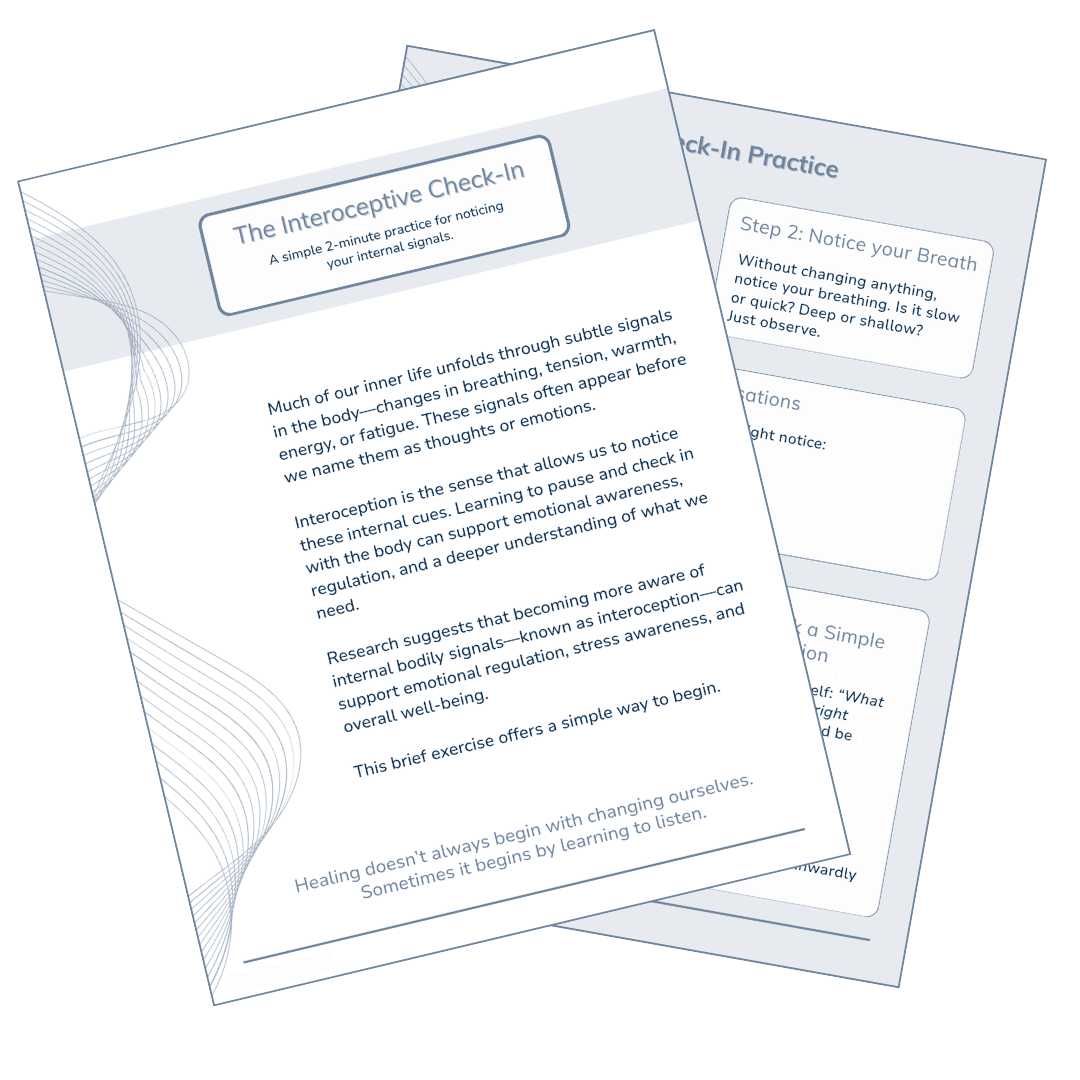
A Brief Interoceptive Check-In
Take a moment to pause and notice what is happening in your body right now.
1. Pause
Allow yourself a brief moment of stillness.
2. Notice your breath
Is your breathing slow, quick, shallow, or deep?
3. Scan for sensations
You might notice tension, warmth, heaviness, or ease in different parts of the body.
4. Notice your energy
Do you feel alert, tired, calm, restless, or something else?
5. Ask a simple question
What might my body need right now?
The answer may be something small—a stretch, a breath, a sip of water, or a moment of rest.
Start Small
When people begin paying attention to body signals, it can sometimes feel unfamiliar. Trying to notice too many sensations at once may feel overwhelming.
For this reason, short moments of attention are often the most helpful starting point. Even brief pauses to notice breathing or tension can gradually build awareness over time.
Interoception Is Not Constant Monitoring
Developing interoceptive awareness doesn’t mean constantly paying attention to the body.
Instead, awareness often becomes part of the background of everyday experience. Much like noticing changes in light or sound, awareness of body signals can gradually become more natural.
The goal is not to monitor every sensation but to become more familiar with the body’s patterns and responses.
When Awareness Feels Difficult
For some people, noticing internal signals can be difficult initially. Experiences like chronic stress, trauma, or longstanding habits of ignoring body signals can affect how clearly internal sensations are perceived.
In these situations, awareness may develop slowly. Approaching the process with patience and curiosity can help create a safer and more comfortable way to reconnect with the body’s signals.
You can learn more about this process in When Interoception Becomes Altered.
Listening Gradually
Strengthening interoception is more about rediscovering signals that have always been there than about learning something new.
The body continually provides information about how we are responding to the world around us. By pausing occasionally to notice these signals, it becomes possible to deepen awareness of internal experience.
Over time, these small moments of attention can help build a clearer sense of the ongoing conversation between the brain and the body.
Continue Exploring
How internal awareness shapes emotional well-being.
Practices to help you notice, understand, and respond to your bodily cues.
If you’d like occasional reflections and updates on interoception, you’re welcome to join my newsletter.
Subscribers also receive two free guides: the Interoceptive Check-In Guide along with the Language of Sensation Guide.